


We may earn revenue from the products available on this page and participate in affiliate programs.Learn More ›
Few things can transform your daily routine like finding the perfect shower head for low water pressure. If you’ve ever endured a shower that feels more like a drizzle, you know how frustrating it can be. Fortunately, today’s shower head technology has come a long way, offering clever solutions that boost water pressure without increasing water usage. Whether you’re dealing with an older plumbing system, water-saving restrictions, or just want to elevate your shower game, the right shower head can make all the difference.
After testing eight shower heads, we discovered some real standouts. Our <a https: alt="H02ME High-Pressure Handheld Shower Head in the bathroom as an example of the best shower head for low pressure">
Testing Stats
Products tested
8
Time spent testing
1 month
Tests performed
3 to 4
Price range
$20 to $200
To select our top shower heads, we started by researching more than 20 products from well-known and emerging brands, then put eight of the most promising models through hands-on testing. We focused on shower heads designed to provide strong water pressure while also considering price, build quality, appearance, spray options, filtration, and other useful features.
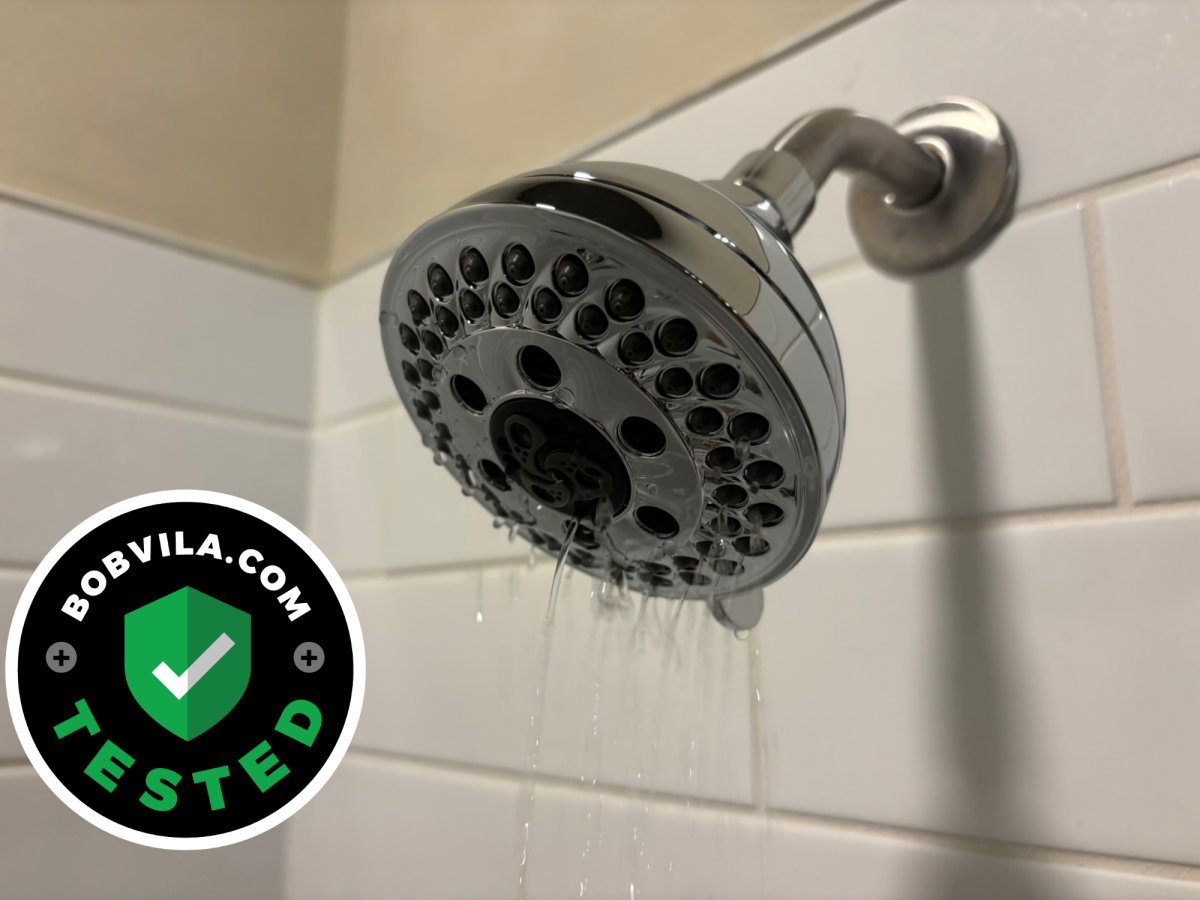
For each round of testing, we installed the shower heads in the same bathroom so we could make consistent comparisons. During testing, we evaluated how easy each model was to install, the strength and coverage of its spray, the usefulness and smoothness of any adjustable settings, and how sturdy the fixture felt during regular use. Handheld models were also removed from their brackets and used for targeted rinsing. We continued using the shower heads for up to a month to look for leaks, loose connections, and other durability concerns. Finally, we compared each model’s performance and features against its price to determine overall value.
Our Testing Scores
Product
Installation
Appearance
Performance
Design
Value
<tr><td>
Read on to learn about what factors to consider when picking the best shower head for a home with water pressure problems. Considerations involve the shower head’s materials, spray settings, and efficiency, as well as style or taste.
There are two main types of shower heads: fixed and handheld. Fixed shower heads attach directly to the shower supply line. They can support a wide variety of shower head shapes but have limited mobility. Handheld shower heads detach from a water supply line, adding versatility for rinsing hair, massaging sore muscle groups, or even bathing the family dog. Ahead, learn more about the two kinds of shower heads.
Fixed
A fixed shower head mounts directly to the shower faucet that extends from the wall. These types have a threaded opening that screws onto the arm either by hand or with a plumber’s crescent wrench. A ball joint between the head and arm allows the user to aim the water to meet different desired angles or water-flow needs.
Most fixed shower heads have a knob or dial that makes it easy to switch between different spray patterns. Fixed models also come in various shapes, sizes, and finishes to meet a broad range of tastes.
Handheld
Handheld shower heads use a long hose, with one end attaching to a fixed head with a long handle and the other end connecting to the shower arm that extends from the wall. The end that attaches to the shower arm typically has a clip fixture that holds the head in place. When resting in the clip, the handheld type functions much like a fixed shower head. Unlike a fixed one, however, the handheld type can be slipped out of the clip fixture when you want to use it for more targeted spraying.
Like fixed shower heads, handheld models have multiple spray settings and come in various designs and finishes. They are good options for parents needing to bathe young children or pets, for those with mobility issues, or for rinsing hair and washing up with a more precise stream.
Material
Most shower heads are made of a combination of metal, brass, and plastic. The internal parts typically consist of brass, which is highly resistant to corrosion and won’t rust. In most cases, the outer housing consists of either plastic or metal.
While metal might seem like the more durable of the two, keep in mind that metal is more susceptible to water damage in the form of corrosion or rust than plastic is. That said, plastic is more likely to break if handled roughly. Metal finishes such as rubbed bronze and nickel are popular material options and hold up well in a wet environment.
Most shower heads feature neoprene nozzles, which are easier to clean and do a better job of resisting hard-water buildup than metal or plastic nozzles.
Style
Shower heads come in various shapes and sizes, including <a https: alt="H02ME High-Pressure Handheld Shower Head unpacked and getting ready for installation">
Installing a shower head is one of the easiest bathroom upgrades one can undertake. DIYers typically can remove the old fixture and install a new one in about 15 minutes with just one or two simple tools. Installation typically involves unscrewing the old shower head from the supply line by hand or with a wrench and screwing on a new one. The required tools usually include a crescent wrench and plumber’s tape.
Rain shower heads that extend from the ceiling of the shower typically require custom plumbing that only a professional is qualified to handle.
For those still wondering about how low-pressure shower heads work, read on for answers to some of the most common questions.
Q. Why is my shower pressure so low?
There are a few reasons why the water coming from a shower head is closer to a trickle than a stream. In older homes, there could be a buildup of sediment in the pipes, hampering the flow of water. The head could also be clogged with residue from hard water, negatively impacting flow. Showering during peak-use periods in a city can also reduce pressure.
Q. Are there shower heads that increase water pressure?
Yes. A high-pressure shower head increases water pressure by aerating the water or compressing it in the head before forcing it out of the jets.
Q. What is the difference between a rain shower head and a regular shower head?
A rain shower head has a significantly larger diameter—up to 1 foot or more—than a standard head. While standard shower heads mount so that they spray at an angle, rain shower heads mount above so that they spray straight down, simulating rainfall.
Q. Do rain shower heads use more water?
No. As all shower heads must comply with the 2.5 GPM restriction, rain types do not use more water than standard shower heads. Since rain shower heads are wider, they distribute the same amount of water across more nozzles, which reduces water pressure compared to standard shower heads.
Q. Do big shower heads have less pressure?
Not necessarily. A well-designed large shower head can still deliver strong water pressure, especially if your home’s water pressure is adequate.
Q. Are all shower heads compatible with any bathroom?
Yes, most shower heads fit standard plumbing, but it’s wise to check compatibility with your shower arm size and water pressure.
Q. Can I install a low-water pressure shower head myself?
Yes, most shower heads are designed for DIY installation and come with clear instructions, often requiring no special tools. You usually just need to screw on the new shower head after applying a few rolls of plumber’s tape.
Meet the Tester
Paul Rankin is a seasoned product reviewer with extensive experience in home improvement and bathroom accessories. His approach to reviews is detailed, thorough, and user-focused, ensuring readers get honest, actionable insights.
Additional research provided by Tony Carrick.
