


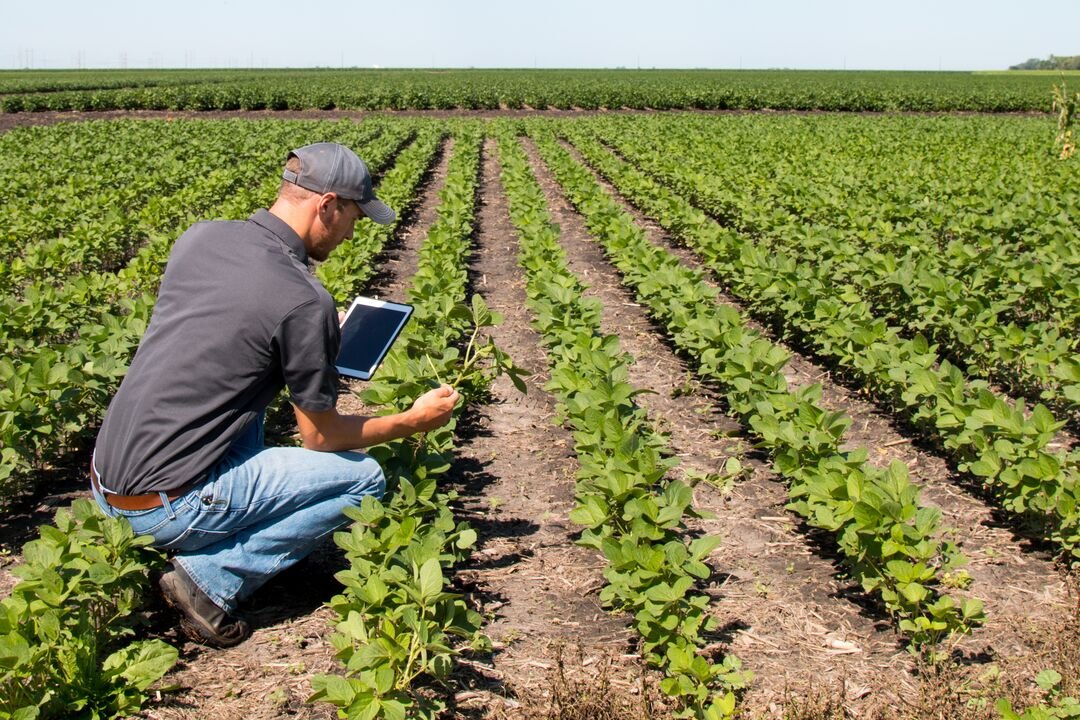
FBN will make the first features of its “AI context engine” available to early test users now, with a broader rollout expected this fall.
Image credit: FBN
Connecting agronomy to commerce
FBN believes it is well placed to bridge that divide thanks to the business it has built for more than a decade. Beginning as a network over which farmers could share pricing data and seed selection information, it has since grown into a full marketplace for inputs, financing, grain trading, and enrolling in premium programs for sustainable practices.
“With AI now, the capability is there to both connect all of those experiences and enable the commerce to take place directly from those experiences,” Baron said. “A farmer can analyze their agronomic program, and then an agent can assist the farmer with an immediate product selection and purchasing decision.”
Farming presents its own unique challenges for AI models. External forces — think weather, geography, soil history, crop rotations — all shape a farmer’s decisions. To be effective, AI has to not only pull data from these manysays Baron
Some farms are already experimenting with AI on their own, he adds.
“You’re getting this explosion in the creativity of farms to create custom solutions and custom insights for their operation,” he said. “But it’s very difficult for them to integrate those hyper-personalized insights with a safe and trusted commercial system.”
Powered by Norm
While the specific partnership with Google AIFF came together in the last few months, it builds on a long relationship between the two companies, with Google Ventures having backed FBN for some years.
Google AIFF will assist FBN in developing what the companies call “agriculture’s first AI Context Engine for farmers.”
The engine will power Norm, FBN’s AI advisor launched in 2023.
Norm, which Baron describes as the AI layer behind the FBN experience, will route tasks across multiple models. “We get to test the most advanced models against each other, and be part of the co-development of them to make them as useful as possible for farmers,” he said. “It allows our team to stay ahead of the curve for what’s coming out of the frontier labs and capabilities from from Google.”
Third-party developers will eventually be able to build on the engine too.
Asked how the partnership will impact data ownership and privacy for farmers, Baron said Google will not have access to farms’ data in any way. “FBN is building the system and continues to be the custodian of the farmer’s information.”
FBN’s data rules haven’t changed, he adds. Individual farm data is never visible to other members, insights are shown only in aggregate, and “we don’t sell information, we don’t sell your PII, we don’t sell access to your information,” Baron said. The one exception is opt-in. Growers can assign their verified practice data to a supply chain contract to earn a sustainability premium
FBN previewed the AI context engine concept at its Farmer to Farmer event last year. Baron said the first personalized, Norm-enhanced features are going to early test users now, with a broader rollout expected this fall.
