


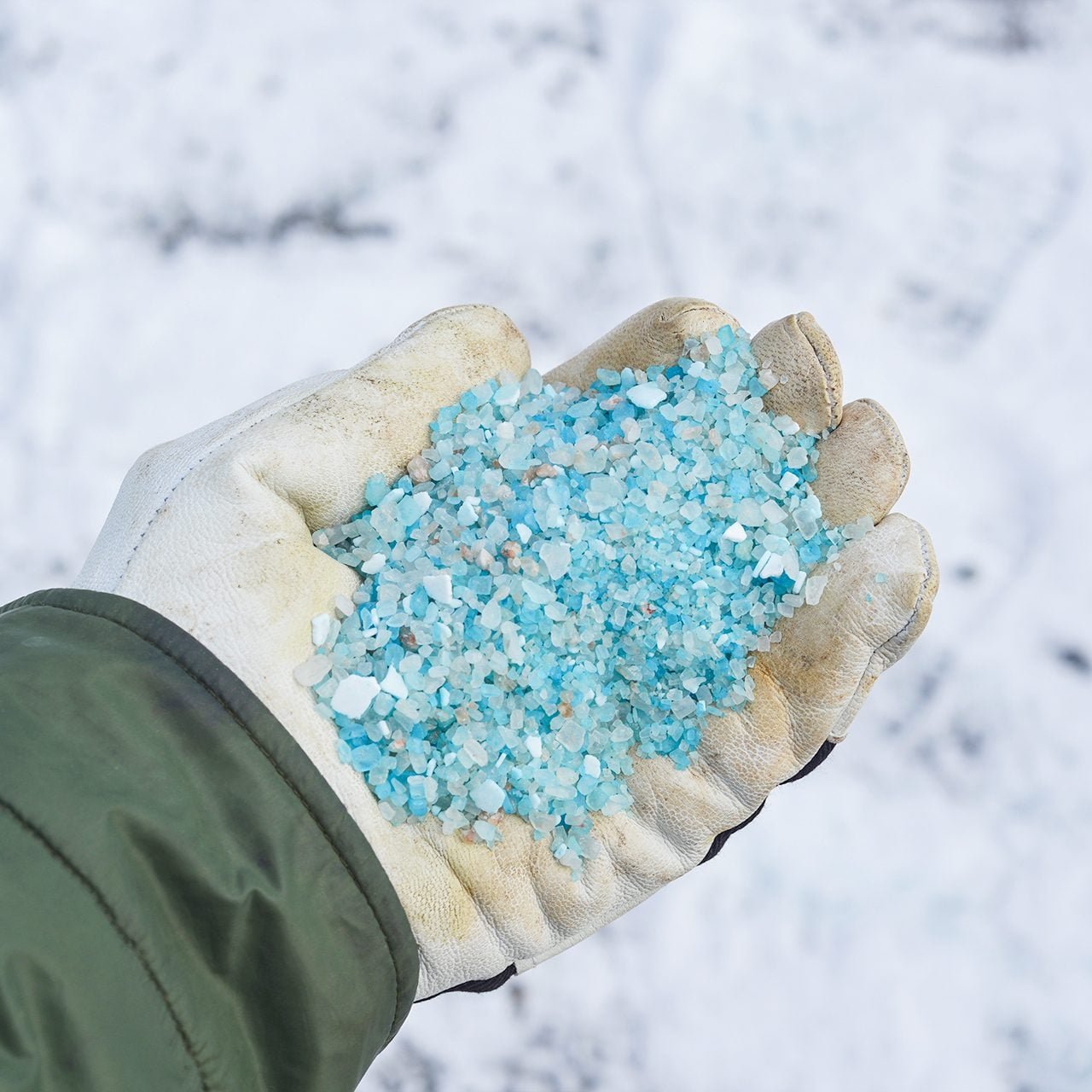



All ice melt products will damage hard-scape Electric mats:Installed before cold weather sets in,electric melting matswarm up and prevent ice from ever forming. These can be very effective on stairs and sidewalks.
Weed torch:Weed torchesare handy when you need to melt a lot of ice quickly. Do not use one to melt ice on wood and avoid painted or stained concrete as well.
How Can You Prevent Salt Damage During Winter?
“The best way to reduce damage from these chemicals is to shovel snow as soon as possible,” Zurcher says, so you can use less of them. Use ice melt sparingly, and only as directed. A handful is enough to treat three square yards. Instead of using ice melt alone, mix a small amount with sand to treat surfaces.
Regular sealing protects cement-based products. “Reseal every three to five years to make sure no water can get in, salty or not,” Murphy says. Additionally, use chloride-free de-icing products, or those labelled as “concrete-safe”.
Does salt damage all concrete?
Newly poured concrete is the most vulnerable to salt damage, but all concrete surfaces will experience damage with enough prolonged exposure to salt.
Can you repair concrete damaged by salt?
It depends on the extent of the damage. Major cracks and breakage mean concrete needs to be removed and repoured, Zurcher says, while surface damage could be skim-coated, with potentially limited results.
Is pet-safe ice melt also safe for concrete?
Pet-safe products will have similar effects on hardscape areas, Zurcher says, as they still contain salt.
About the Experts
- Pete Murphyis the director of
<li><b>Jamey Zurcher</b>is a project manager and lead designer at
