






We may earn revenue from the products available on this page and participate in affiliate programs.Learn More ›
Home thermostats have come a long way from those early models with manual temperature dials that may or may not accurately reflect a room’s actual temperature. Today’s home thermostats are highly efficient. Many are programmable. Some even connect with smart-home systems for remote heating and cooling control
We decided to test a variety of home thermostats to see which ones were a step above the rest. Based on our tests, we chose the
<ol><li><strong>BEST OVERALL:</strong>
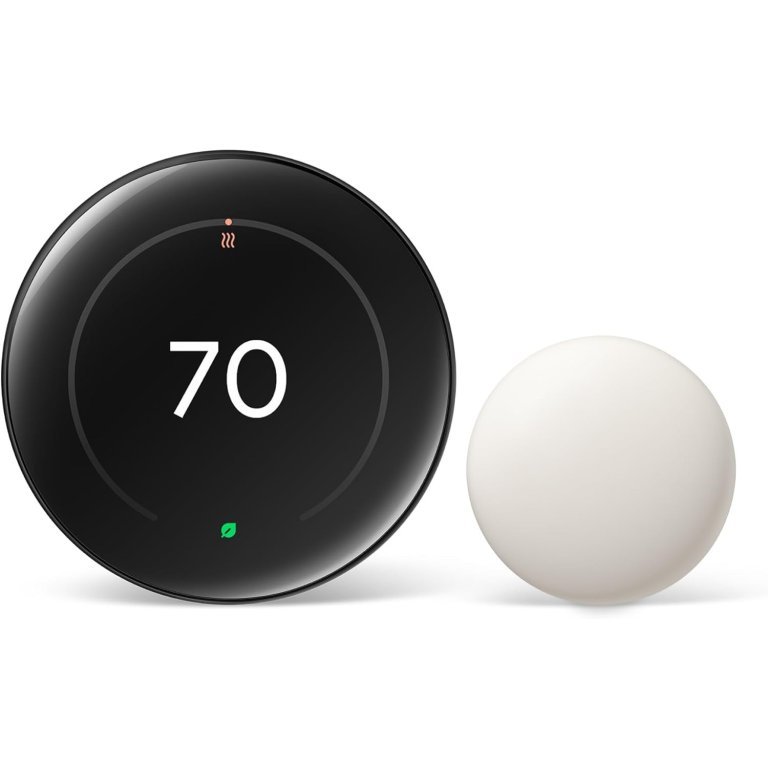
Google Nest Learning Thermostat
Amazon Smart Thermostat
Emerson Non-Programmable Single-Stage Thermostat
Honeywell Home T9 Smart Thermostat With Sensor
<p><strong>Get the Honeywell Home T9 home thermostat at</strong> Amazon.
Best Large Display
Honeywell Home WiFi 9000 Color Touchscreen Thermostat
The Ecobee Premium Smart Thermostat claims that it will take keeping your home at the optimal temperature to the next level. We did like the interface and app. However, the Ecobee failed to deliver on the extras that are supposed to separate it from more affordable smart thermostats. We were most excited about the sensor that provides air quality reports. However, the thermostat was attempting to calibrate the air quality sensor during the entire testing period—a process that the manual notes should only take 24 hours. More importantly, our testing revealed significant issues with controlling gas furnace temperature: The Ecobee routinely heated the room to 3 to 4 degrees Fahrenheit above the set temperature before finally cutting it off (we verified the actual room temperature through the use of two independent room thermometers). Given these problems and the steep price tag, we’d be hard-pressed to recommend this model.
Jump to Our Top Picks
How We Tested the Best Home Thermostats
We looked at 30 different home thermostats to narrow our choices down to the top models on our list. Our selections come from some of the best-known brands in thermostats and cover a broad range of price points, from basic digital models to premium smart thermostats.
We assessed each home thermostat by installing and using each one for about a week. During that testing period, we assessed how well they performed their basic function of controlling a home’s heating, ventilation, and air conditioning (HVAC) system and maintaining set temperatures. We also used and evaluated any additional features, including schedule programming and, if applicable, smart features like geofencing, auto-scheduling, smartphone apps, and any smart sensors included with the thermostat.
What to Consider When Choosing a Home Thermostat
While you might be tempted to run out and buy a smart thermostat that promises energy efficiency, don’t pull out the credit card until you’re sure it’s the right pick for your home. The best home thermostats are compatible with an existing heating and cooling system, offer features to make life simpler, and fit within your budget, which includes allowing for professional installation costs if necessary.
HVAC System
When it comes to choosing the best home thermostat, one size does not fit all. Some thermostats only control heat; some only control cooling, and some control both. The type of thermostat required depends on the HVAC system in the home. To determine the type of thermostat their home needs, shoppers will want to remember:
- Separate heating and cooling systems require two separate thermostats.
- A zoned HVAC system requires a zone-enabled thermostat.
- A home with a heat pump or a multistage heating system requires a type-specific thermostat.
- Some new thermostats are compatible with mini-split systems and even window air conditioning units.
Sensors
Smart thermostats may require users to place sensors in various rooms around the home to sense activity, monitor the temperature, and adjust the heating and cooling accordingly. While they add to a thermostat’s expense, Morey says they’re worth it. “Many of the latest smart thermostats offer remote temperature and humidity sensors that can be placed throughout the home,” he explains. “The thermostat can wirelessly connect to these sensors and control the temperature in a home in a way that keeps your comfort consistent throughout the home.” When any of these factors change or deviate from the norm, the sensor will trigger the thermostat to send an alert to the user’s smartphone.
Display and Controls
The best home thermostat is easy to see and program. These days, many manual and programmable thermostats feature large LED screen displays and easy-to-follow prompts. These prompts help the user set the room temperature and program a custom heating and cooling schedule directly through the thermostat.
While you can set some smart thermostats much the same way as the manual and programmable varieties, their programming capabilities can be a bit more limited. Many smart thermostats are built with a small screen and require you to program theme, tablet, or PC
Installation
Replacing an existing manual or programmable thermostat with a new manual or programmable model is relatively simple: The existing wires simply connect to the new thermostat. Installing this type of thermostat is often a DIY project.
Replacing an existing smart thermostat with a new one may also be a DIY project. However, if a C-wire is not available, running a new one is typically a job for an electrician. Installing the smart thermostat is only the first part of the task. Next, the user must download an app and follow the prompts to connect the thermostat to the home’s Wi-Fi network. Most of the time, this is relatively simple with a basic knowledge of routers and networks.
Aesthetic
Thermostats were always meant to be functional, not decorative. While many basic models that lean more toward functionality are still available today, a lot has changed over the years in terms of aesthetics. These days, many thermostats have sleek digital display screens that look more appealing than their older counterparts. Some allow users to download a chosen background image onto the display. Most are low profile, so they don’t stick out far from the wall. A few newer models are even designed for recessing in a wall stud space, making the front of the screen nearly flush with the wall’s surface for a sleek, clean look.
Before upgrading to a new thermostat, many shoppers often have questions about which option they should choose. While some would rather stick to a functional, manual thermostat, others interested in creating cooling and heating schedules want to know more about programmable and smart options. Here are a few of the most frequently asked questions and their answers about the latest thermostats.
Q. Will any thermostat work in my home?
Probably, but some additional wiring may be required to install a smart thermostat if the home is more than 5 to 10 years old.
Q. How does a smart thermostat work?
A smart thermostat connects to your home’s Wi-Fi network to relay information and allows you to control the HVAC system remotely or by voice commands.
Q. Do you need Wi-Fi for a smart thermostat?
Yes. Smart thermostats must connect to the Wi-Fi in a home so they can communicate with a smartphone.
Q. How do I choose a programmable thermostat?
Programmable thermostats can be smart or nonsmart. Select one that can schedule at least 7 days of heating and cooling and lets you override the schedule by adjusting the temperature.
Q. Can I install a smart thermostat myself?
Yes, if your home already has a C-wire installed. If your home doesn’t have a C-wire, a professional must install one first.
Q. Does a smart thermostat still work during an internet outage?
The features that make the thermostat “smart” (like geofencing and smartphone app control) won’t work when the internet is out, but you can still control the thermostat manually.
Meet the Tester
Tony Carrick is a freelance writer specializing in home improvement, landscaping, technology, home security, and design. His articles have been featured on such sites as Angi, Popular Science, Futurism, 360 Reviews by U.S. News & World Report, Domino, and more. Carrick has conducted rigorous product testing on everything from power tools to home security systems to backyard grills. With each review, his goal is to help readers determine whether a product meets their needs and if it is or isn’t worth its price tag.
Additional research provided by Glenda Taylor.
