





We may earn revenue from the products available on this page and participate in affiliate programs.Learn More ›
When the weather turns chilly, most people pull out heavy coats, rugged boots, and, of course, ice melts. Ice-melting products are an important line of defense against slick, dangerous conditions on driveways, sidewalks, and other surfaces. Without using them, drip lines and low spots can turn into serious home safety hazards.
We researched and tested 10
Natural Rapport The Only Pet-Safe Ice Melt You Need
Best Bang for the Buck
Snow Joe Premium Enviro Blend Ice Melter With CMA
Best Salt-Free
Safe Paw Pet-Safe Salt-Free Ice Melt
Petco.
Best All-Natural Formula
Redmond Ice Slicer Nature’s Blend Ice Melt
Best for Roofs
Roof Melt RM-65S Ice Melt Tablets
Walmart.
Jump to Our Top Picks
How We Tested the Best Ice Melts
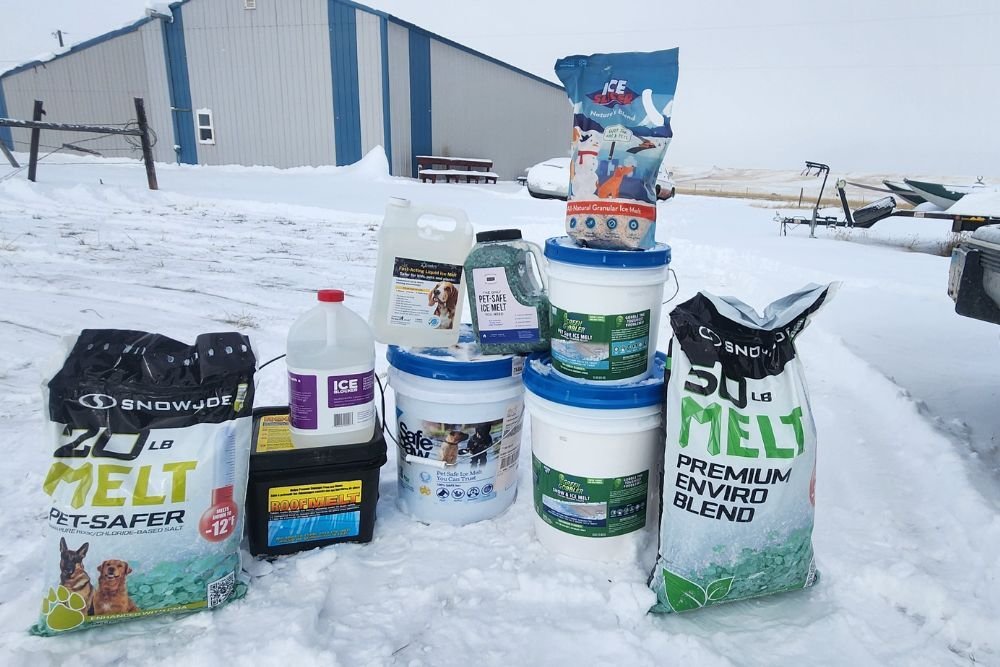
The best way to determine how effectively various ice melts perform is to fully test each product. As residents of Montana, we began our testing in the aftermath of a winter snowstorm that turned bitter cold. We applied the products to gravel, pavement, and grass in temperatures as low as -6 degrees Fahrenheit.
As the snow went through several melt/freeze cycles over the coming days, it formed icy spots under our rooflines and in several low spots. We tested the ice melts in freezing temperatures on water drips and overnight freezes that created walking hazards each morning. We analyzed how long it took to apply each product, how quickly they melted ice and snow, their degree of pet friendliness when used around our dogs, and a number of other hands-on factors. Lastly, we compared pricing, packaging, and ease of application.
What to Consider When Choosing an Ice Melt
Ice melt products are designed for use either before or after snow or ice has fallen. Their application prevents ice from forming or melts it into a slush that’s easier to clear with a standard snow shovel. Each type of ice melt will perform differently depending on its form and chemical composition. Other variables, such as temperature, ground type, melting time, and environmental impact are essential to consider before purchasing an ice melt product.
Ice melt is available in solid and liquid formulations, each with pros and cons. Solid ice melt typically comes in pellets and granules. It works well for many applications and is typically the go-to solution for road crews dealing with icy and snowy weather. Pellets and granules are generally less expensive and easier to store than liquid formulas, and they add a “crunchy” texture on surfaces that adds grip for walking and driving. Their main downsides are that they scatter more easily across icy surfaces, making them harder to apply with precision, and that they tend to be slower acting and more likely to clump together, which sometimes makes them less effective.
Liquid ice melt is a wise choice for lower-temperature situations and times when faster results are necessary. That said, some products must be applied before ice forms rather than after. When applied, liquid is less likely to scatter, staying in place for longer-lasting results. Liquid de-icers, which tend to cost more, can be more challenging to transport and store because of their weight. Plus, if heavy rain ensues, the product can get washed away.
Self-heating ice melt, which comes in pellet and granular form, generates its own heat when in contact with ice and snow—a process known as an exothermic reaction. Unlike other products that must absorb moisture to create a brine to melt the ice, self-heating ice melt can get right to work.
Ice melts work by absorbing the moisture on the top of the ice, creating what’s called brine, and working its way down to break the bond between the ice and the surface. This creates cracks and flakes that are safer to walk on and easier to remove. All of these products have a temperature limit. If temperatures plummet beyond a product’s ice melting point, the chemicals will no longer be effective. Here’s what to expect from the various ice melt types available:
Calcium Chloride
- Less expensive than sodium acetate but pricier than most other forms
- Available as pellets, flakes, powder, and liquid
- Forms a brine to lower freezing point and produces heat to melt ice
- Good choice for concrete
- Melting temperature of -25 degrees Fahrenheit
- Can kill plants if applied too heavily
- If it leaks into waterways, it reduces oxygen levels and can kill aquatic life
Magnesium Chloride
- Slow melting
- Available in pellets or granules
- More expensive than other ice melts
- Releases its heat to melt ice
- Less corrosive than calcium chloride or sodium chloride
- Somewhat safer for plant life
- Melting temperature of 0 degrees Fahrenheit
Calcium Magnesium Acetate
- Less corrosive than rock salt (sodium chloride)
- Available in pellets or granules
- Requires larger applications to be effective
- Pet-friendly
- Easier to clean up than others
- Melting temperature of 20 degrees Fahrenheit
Potassium Chloride
- Comes in pellets or granules
- Pricier and less effective than other forms, so it’s not used much anymore
- Safe for plants
- Melting temperature of 25 degrees Fahrenheit
Rock Salt (Sodium Chloride)
- One of the least expensive types
- Comes in granules
- Less effective in colder temps
- Corrosive to metals
- Leaves white residue on surfaces
- May kill plants if overused
- Melting temperature of 20 degrees Fahrenheit
Urea/Carbonyl Diamide
- Typically used as a fertilizer
- Comes in pellets or granules
- Contains nitrogen that can burn plants when applied in excess
- Rarely used anymore
- Not effective in lower temps
- Melting temperature of 25 degrees Fahrenheit
Surface Type
Many of the chemicals in ice melts can potentially damage surfaces, so it’s important to consider where the product will be used. The most common areas—driveways, sidewalks, decks, and porches—can be composed of different materials, such as concrete, asphalt, wood, and metal. Packaging and product descriptions of the best ice melts will reveal what materials they can be used on safely, so be sure to read this information prior to purchase. It would be unwise to apply a product that could corrode concrete, rust metal, or damage wood on those surfaces around the home.
Temperature
The quest for comfort and convenience in frigid weather has led to the invention of such products as heated jackets, heated gloves, and acceptable if the temperature in an area seldom gets that low, but these products won’t get the job done if you live in a colder spot. For locations where temperatures can reach less than 20 degrees Fahrenheit, you’ll want to purchase a product specifically made for lower temperatures.
Melting Time
The time it takes a product to melt ice and snow depends on several factors. Liquid ice melters and self-heating ice melters act fairly quickly. Unlike solid melters that take time to absorb moisture and create the brine, liquid products are already a brine. Self-heating ice melters have a similar advantage: Instead of absorbing moisture, the pellets will heat up more quickly and melt the ice and snow faster than other ice melters. Regardless of which form you choose, there will still be some downtime while you wait for it to work, which you put to good use cleaning your windows with an ice scraper.
Longevity
Longevity refers to an ice melt’s ability to keep working beyond the initial application period. A long-lasting ice melter is especially helpful when snowstorms or icy rain continue throughout the day. Although long-lasting ice melt tends to be more expensive, the cost can even out since smaller amounts of product tend to get the job done.
Safety and Environmental Impact
The chemicals in some ice melters can be hazardous to pets and plants. According to Alex Blutinger, Medical Director of
<p>A solid, noncorrosive choice for concrete is the
