




We may earn revenue from the affordable price, the
<ol><li><strong>BEST OVERALL:</strong> Alden Grabit Pro Bolt and Screw Extractor 4-Piece Kit
4Spiral extractors with reverse-threaded drill bitsSteelIrwin 10-Piece Spiral Extractor and Drill Bit Set
5
Spiral extractors with reverse-threaded drill bits
Steel alloyBosch 12-Piece Screw Extractor Set
6
Spiral extractors with reverse-threaded drill bits
High-carbon steelTopec 35-Piece Screw Extractor and Drill Bit Set
16 drill bits, 13 multi-spline extractors, 6 spiral extractors
Spiral extractors, reverse-threaded drill bits, multispline screw extractors
Steel Vampliers 6.25-Inch Screw Extraction Pliers
N/A
Pliers
High-carbon steelIrwin Bolt-Grip 5-Piece Bolt Extractor Set
5
Spiral extractors
High-carbon steelNeiko Multispline Screw and Bolt Extractor Set
25
Multispline extractors
Chrome molybdenum steelAlden Grabit Micro Broken Bolt Extractor 4-Piece Kit
4
Spiral extractors
Steel
Our Top Picks
The products below represent some of the top screw extractors on the market. This includes small sets designed for occasional use and large sets for pros and avid DIYers who regularly deal with damaged screws and bolts.
Best Overall
Alden Grabit Pro Bolt and Screw Extractor 4-Piece Kit
Runner-Up
Irwin 10-Piece Spiral Extractor and Drill Bit Set
Best Bang for the Buck
Bosch 12-Piece Screw Extractor Set
The Home Depot.
Most Versatile
Topec 35-Piece Screw Extractor and Drill Bit Set
Amazon.
Best Extractor Pliers
Vampliers 6.25-Inch Screw Extraction Pliers
Amazon.
More Great Options
While we didn’t test the products below, they still make the grade based on their impressive specs and extensive positive customer reviews.
Best for Bolts
Irwin Bolt-Grip 5-Piece Bolt Extractor Set
Lowe’s.
Best for Large Fasteners
Neiko Multispline Screw and Bolt
Best for Small Fasteners
Alden Grabit Micro Broken Bolt Extractor 4-Piece Kit
Amazon.
Jump to Our Top Picks
How We Chose and Tested the Best Screw Extractors
Testing Stats
Products tested
5
Time spent testing
3 hours
Tests performed
3
Price range
$25 to $60
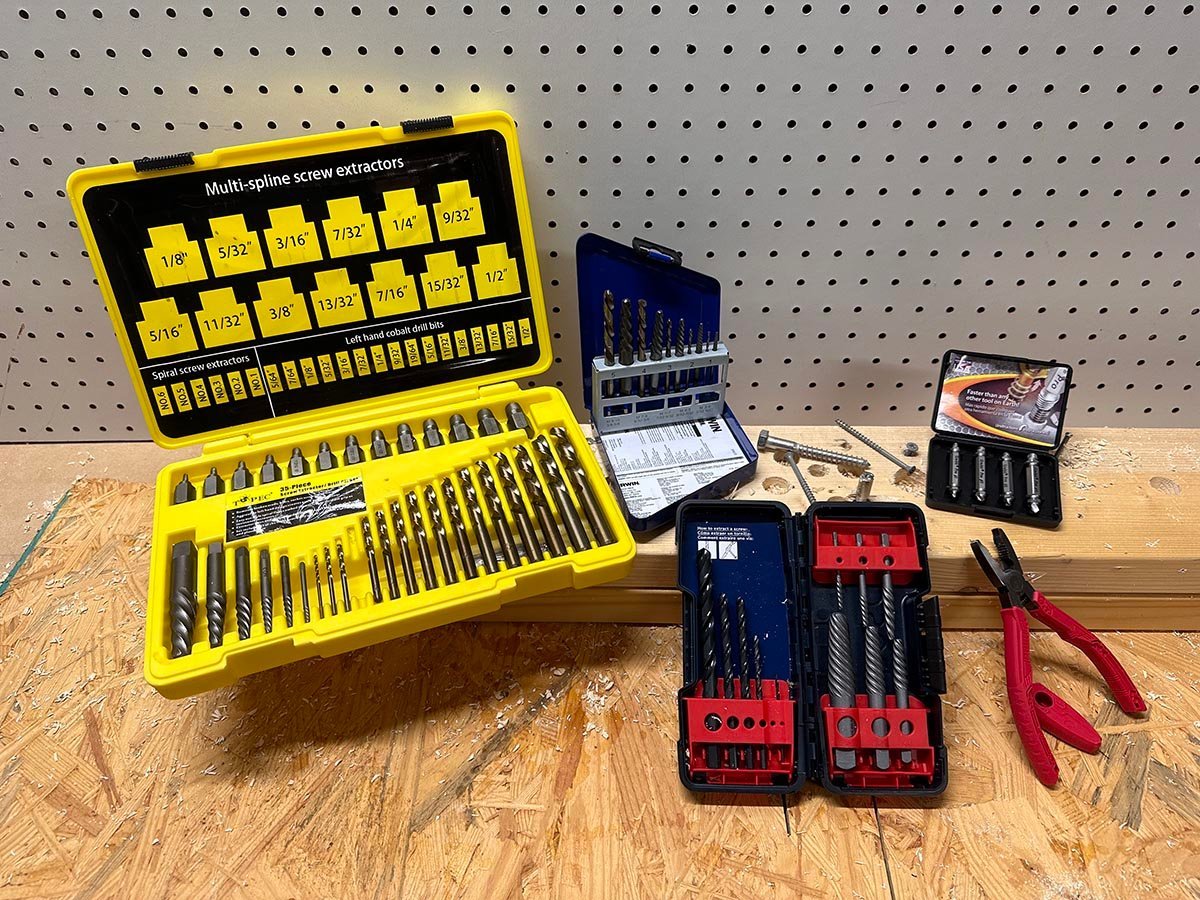
We assembled our list of the top screw extractors through a mix of research and hands-on testing. After comparing the specs and scouring reviews for some two dozen different screw extractors, we narrowed down the list to eight models, and then proceeded to test the top five sets.
We tested each on a variety of fasteners, including small and large screws and bolts, keeping in mind that screw extracting is challenging. No screw extracting kit will have a 100 percent success rate. Keeping that in mind, we assigned points to each kit based on how effective it was at removing fasteners and how easy it was to use. We also considered the range of extractor sizes, awarding points for those capable of handling a broader range of screw and bolt sizes. We considered the durability of each kit. Finally, we factored in performance and durability along with price to determine the value of each kit.
Our Testing Scores
Product
Performance
Durability
Value
Alden Grabit Pro Bolt and Screw Extractor 4-Piece Kit
4
5
5
Irwin 10-Piece Spiral Extractor and Drill Bit Set
4.3
4
4
Bosch 12-Piece Screw Extractor Set
3.7
4
4.5
Topec 35-Piece Screw Extractor and Drill Bit Set
4.3
5
4
Vampliers 6.25-Inch Screw Extraction Pliers
4
5
4
What to Consider When Choosing a Screw Extractor
Screw extractors come in different types to suit the different sizes of damaged fasteners you can’t remove with a screwdriver. Read on to learn more about each type and crucial factors, including gripping power and the material one will want to consider when choosing the best screw extractor.
- Bolt extractor: A bolt extractor looks similar to a standard socket head except for the spiral threads inside it. These threads bite into the bolt head as the user turns the socket counterclockwise using a socket wrench. The threads typically have a spiral pattern that becomes tighter with force.
- Spiral screw extractor: A spiral screw extractor removes screws or bolts by fitting them into a hole that’s been drilled into the fastener’s head with a drill bit. The extractor has reverse threads that grip the screw as it rotates inside the hole counterclockwise. Many spiral screw extractor kits come with matching drill bits. Some are double-sided, with a drill bit on one side and an extractor on the other.
- Extraction pliers: Extraction pliers are a good option for damaged screws or bolts whose heads are protruding from the surface of the material. These specialty pliers have teeth designed to grip the head firmly, allowing the user to remove the screw by attaching the pliers and turning them counterclockwise.
- Stud and bolt extractor tool:This tool looks similar to the chuck of a power drill. Like extraction pliers, it only works with screws or bolts that are sticking out of the material. To use an extractor tool, place it over the head of the stud or bolt, then tighten the grip around it like a vice. Attach the end to a 0.375-inch or 0.500-inch ratchet and turn counterclockwise to remove the bolt or screw.
Supported Screw Size
Screw heads come in a wide variety of sizes, so it’s important to pay attention to what sizes the screw extractor can accommodate. Most sets include sizes ranging from 0.125 inch up to 0.625 inch. Larger sets have extractors as large as 0.875 inch and are capable of removing large bolts on vehicles and industrial machines. Other sets can remove tiny machine screws found in electronics, such as laptop computers, with extractors as small as 0.0781 inch. While a small kit with four or five extractor sizes is adequate for most, it makes sense for pros or DIYers to invest in a set that can cover a broad range of sizes.
Gripping Power
Different types of screw extractors use different strategies for gripping a stripped or rusted screw or bolt head. Some drill into the head and use reverse threads to bite into and grip the head, while others grab the head by fitting over it. Although the latter generally creates more gripping power, this style of extractor is limited to instances where the bolt or screw head is jutting out of the material enough to allow the tool to grip it.
The material type also affects gripping power. Drill bits and extractors made of high-quality steel alloys do a better job of boring into and gripping fasteners and last longer than those that use cheaper materials.
Material
Since screw extractors must burrow into metal screws in order to work, they need to consist of hard metal. Most screw extractors are made of high-speed steel, the same steel alloy used in many drill bits and saw blades. This type of steel is harder than other alloys and is capable of enduring high temperatures without softening, a key characteristic for drilling into the heads of metal fasteners.
If it’s in the budget, extractors made of cobalt steel are even better, but they’re also pricier. Cobalt steel is harder than high-speed steel and holds up better to the high temperatures created by metal cutting into metal. Cobalt steel also has a higher tensile strength, which makes it a better choice for extractors with a narrower flute of 0.125 inch or less. Stay away from extractors that consist of softer alloys, as they will not be hard enough to do the job.
Ease of Use and Versatility
Screw extractors have features that make them easier to use and ensure that the right drill bit is used with the right extractor. Those that work in conjunction with a drill bit must match the bit size to be effective. This type of extractor should have the compatible drill bit size etched onto its side to avoid confusion.
Double-sided extractors are some of the most convenient models as they feature the drill bit and extractor on a single reversible shank, eliminating the need to hunt for a compatible drill bit. Simply drill the hole with one side, then flip the shank to apply the extractor.
Some kits use magnetic extension bit holders that can hold either the drill or extractor bit. This allows the user to quickly swap between them, speeding the screw-removal process along.
Since screw and bolt extractor kits can include 30 pieces or more, most come with handy carrying cases that keep all the pieces organized so they can be found when needed.
Tips for Using a Screw Extractor
Most screw extractor tools are easy to use, even for beginners. Here are a few valuable tips for using a screw extractor.
- To use a screw extractor, begin by drilling a hole into the head of the damaged screw. Apply thread cutting oil to the drill bit prior to drilling. This will make it easier to drill through the metal by reducing friction.
- Before attempting to remove the damaged screw with the extractor, apply penetrating oil to the screw’s threads. Wait at least 15 minutes after application to allow the oil to make its way into the threads, then use the extractor. The oil should help loosen the screw, making it easier to remove.
- If using a power drill to remove the screw, use a slow speed. This will maximize the drill’s torque and allow the extractor’s threads to grip the drilled-out hole in the head of the fastener. Using too high a speed can cause the extractor to slip in the hole.
If you have additional questions about how to use a screw extractor, read on for answers to some common queries about these handy tools.
Q. What’s the use of the drill bit on the extractor?
The drill bit is a crucial part of the extractor that is used to bore a hole in the head of the damaged bolt or screw, creating a place for the extractor to penetrate and grip the screw head so you can remove it.
Q. What is the ideal length of a screw extractor?
There really is no standard length for a screw extractor. In fact, short and long extractors work equally well at removing damaged screws and bolts. It’s more important to choose the correct- diameter drill bit and extractor to suit the damaged fastener.
Q. How do I know which size extractor to use?
To determine the proper extractor size, begin by choosing the proper drill bit size. The drill bit should be about half the diameter of the screw head. For example, to remove a 0.375-inch screw, begin by drilling a hole in the head with a 3/16-inch drill bit. Once the hole is drilled, use an extractor that’s slightly smaller than the drill bit—most kits conveniently match the bits on the kit to the extractor. The slightly smaller extractor should fit inside the hole but still be tight enough that its threads can lock into the hole’s contours.
Q. Do you screw the extractor forward or reverse?
Screw extractors are reverse threaded. This means that you’ll need to set your drill/driver or impact driver in reverse to remove the fastener. Keep in mind that the drill bits in screw extractor sets are also usually (though not always) reverse threaded, meaning you’ll need to set your drill in reverse when drilling the pilot hole.
Q. What is the difference between a straight and spiral screw extractor?
A straight flute extractor is a smooth tapered bar. After drilling a pilot hole in the screw head, you have to hammer the straight extractor into the screw head, then use a pair of pliers to twist the extractor counterclockwise to remove the screw. A spiral screw extractor doesn’t require any hammering. It has threads that bite into the pilot hole, allowing you to remove the damaged screw with a wrench or drill.
Meet the Tester
Tony Carrick is a freelance writer specializing in home improvement, landscaping, technology, home security, and design for such sites and publications as Popular Mechanics, Pro Tools Review, CNN Underscored, and This Old House magazine.
